
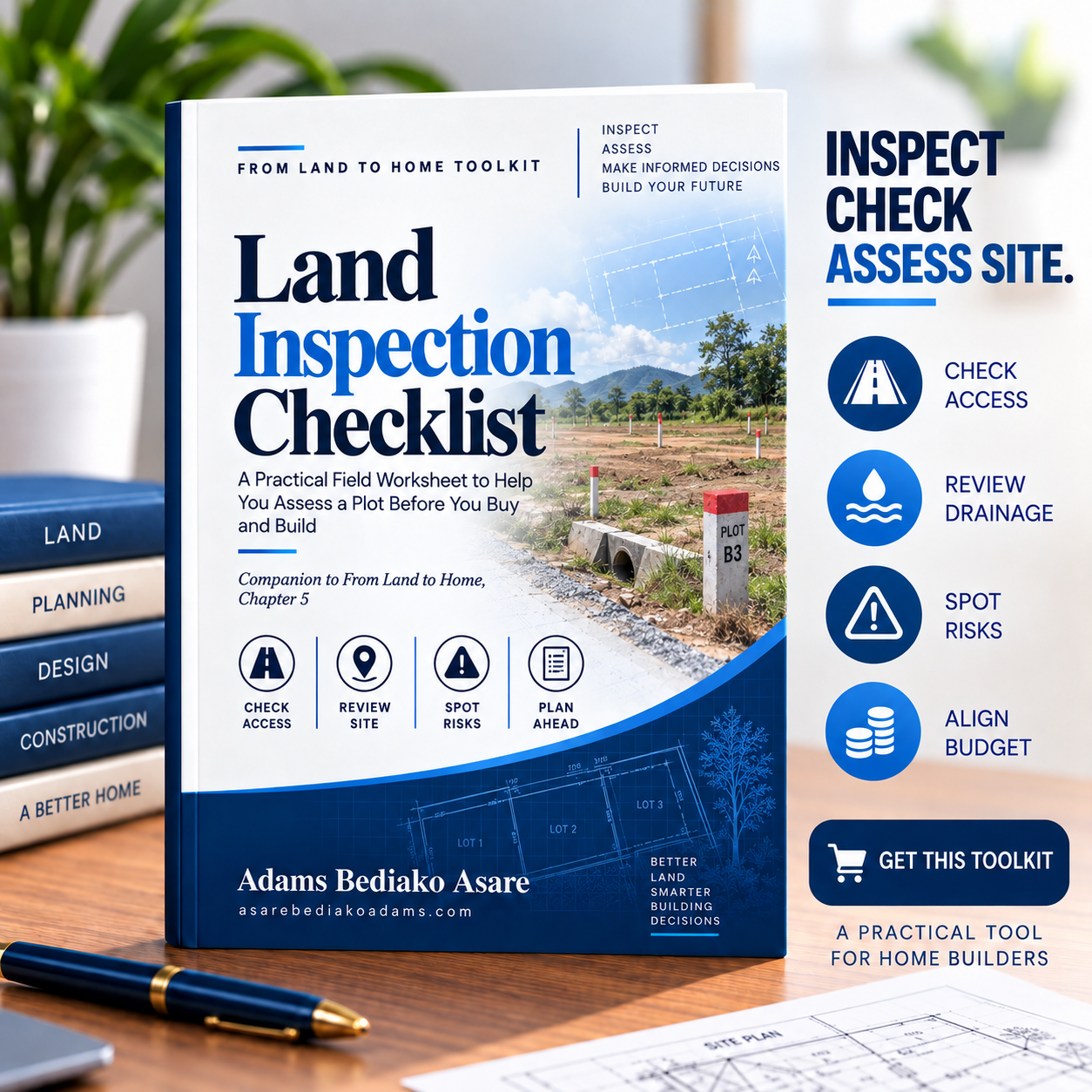
The Land Inspection Checklist is a practical field worksheet designed to help you assess a plot carefully before you buy or build. It is Tool 2 in the From Land to Home companion toolkit and supports Chapter 5 of From Land to Home. The worksheet is intended for use during every visit to a potential plot, ideally at different times and at least once after rainfall.
Buying land involves more than checking its size and location. Road access, drainage, flooding, slope, soil condition, utilities, neighbouring development and future suitability can all affect your building plans and costs. This checklist gives you a structured way to record what you see, what you are told and what still requires professional advice.
Assess the Location Properly
The worksheet helps you examine the wider area around the plot before making a decision. You can record information about:
- Road access throughout the year
- Rainy-season conditions
- Drainage and the direction of rainwater
- Previous flooding
- Availability of water and electricity
- Development occurring in the area
- Planned public uses such as roads or drains
- Security
- Access to workplaces, schools, markets, health services and transport
- Suitability of the area for your future needs
These questions help you move beyond the appearance of the plot and consider how practical the location may be once construction begins and after you move in.
Examine the Physical Condition of the Plot
The Land Inspection Checklist also guides you through the physical characteristics of the land itself. You can assess the size and shape of the plot, slope, ground condition, drainage and access for construction vehicles.
This is particularly useful because some plots may appear affordable at purchase but require additional spending on earthworks, drainage, retaining structures, access or utility connections.
Identify Warning Signs Early
The checklist includes a dedicated section for signs that may indicate problems. These include:
- Water marks on nearby walls
- Areas that remain wet after rain
- Gullies created by running water
- Cracks or tilting in nearby buildings
- Loose fill or disturbed ground
- Low areas below the road or neighbouring properties
Recording these observations gives you specific issues to raise with an engineer, surveyor or other relevant professional before you commit funds.
Speak to People Who Know the Area
People who already live near the plot can provide useful local information. The worksheet gives you space to ask about flooding, rainy-season road conditions, reliability of water and electricity and any other concerns they may know about.
Questions about land ownership, however, are directed to your lawyer rather than neighbours.
Understand Possible Additional Costs
A major feature of this toolkit is the Site Cost Flags section. It prompts you to ask a professional how conditions on the site could affect your construction budget.
You can record cost implications associated with:
- Slope and levels
- Drainage
- Delivery-vehicle access
- Soil and ground conditions
- Distance to utility connections
- Trees, old structures or fill that may need removal
This gives you a more realistic picture of the land before negotiations or purchase.
Create a Photographic Record
The worksheet also reminds you to photograph the plot from each corner, boundary markers, access roads, drains, low areas, neighbouring buildings and anything that concerns you.
Keeping photographs alongside your written observations makes it easier to review the plot later and discuss concerns with professionals.
Make a Clear Decision
After completing your inspection, the final section helps you record your concerns and decide what happens next. The options include:
- Proceed to land due diligence
- Negotiate the price or terms
- Walk away
This makes the checklist useful as both an inspection record and a decision-support tool.
Who Is This For?
The Land Inspection Checklist is suitable for:
- First-time land buyers
- Individuals planning to build a family home
- Ghanaians living abroad who are buying land for construction
- Property owners comparing different plots
- Families planning a future home
- Prospective buyers who want a structured site-inspection process
- Anyone who wants to identify physical and cost-related concerns before purchase
How to Use It
Take the worksheet with you whenever you inspect a plot. Record the date, weather conditions, people who attended and what you observed.
Visit the site more than once where possible. A plot can look very different during dry weather and after heavy rain. The toolkit also recommends taking someone who understands construction.
Use the completed checklist as a reference when speaking with your engineer, surveyor, lawyer or other professional advisers.
Product Details
Product: Land Inspection Checklist
Series: From Land to Home Companion Toolkit
Tool Number: Tool 2
Related Chapter: Chapter 5
Format: Digital PDF worksheet
Length: 3 pages
Author: Adams Bediako Asare
Website: asarebediakoadams.com
The toolkit is provided for personal use and should not be sold or redistributed without permission.


Reviews
There are no reviews yet.